The future of justice in ‘the machine age’
PRESIDENT'S MESSAGE | 24 August 2026
PRESIDENT'S MESSAGE | 24 August 2026
We lawyers are in the business of resolving very human issues. Whether representing a vulnerable accused person, or a billion-dollar corporation, our advice and advocacy affect real people’s lives, liberty, and property.
We bear these weighty responsibilities, relying on the wisdom of human judgment, within a justice system that’s evolved over centuries. In just the last few years, artificial intelligence has transformed the speed of that development.
Last week, the Master of the Rolls and Head of Civil Justice in England and Wales, Sir Geoffrey Vos, delivered the John Lehane Memorial Lecture in the Banco Court. It was titled Artificial intelligence: implications for the Judiciary and the broader legal profession.
The lecture was the latest in a series delivered by Sir Geoffrey on AI, in which he has argued the urgent need for the legal community, and society itself, to consider ‘what judicial decisions can or should be appropriately informed or taken by AI and what judicial decisions ought never to be taken by AI’. In a speech in April this year, Sir Geoffrey described this era as ‘the machine age’.
He also said, “It is now inevitable that basic economics will dictate that routine judicial decision-making will be informed or directed by machines.” Human judges, he says, would still be involved in “final appellate decisions about a human’s basic legal rights”.
Such observations would have been almost unimaginable outside science fiction at the turn of this century. And the justice system is just one area of society grappling with these questions. In South Australia, the Premier has announced a Royal Commission into AI, describing it as “the greatest technological change that we’ve seen in human history.”
For the legal profession, however, one principle remains clear. Regardless of how technology changes the way we work, solicitors must continue to stand behind their advice and take responsibility for the outcomes delivered to clients. That obligation applies equally in the courtroom, the boardroom, and when drafting a complex contract.
In his address at our recent Specialist Accreditation Conference, Deputy Chief Justice of the Federal Circuit and Family Court of Australia noted research that found AI Legal Models were right about 80 per cent of the time.
His Honour cautioned, “the more persuasive the AI output appears, the more important it is that the reviewer has the specialist knowledge to recognise error. Verification is not a mechanical process that the AI tools themselves do.”
The Law Society is committed to helping to ensure that the solicitor profession has the resources necessary to meet the challenges and opportunities of this new era.
You can access the Law Society’s AI for Legal Professionals page here.
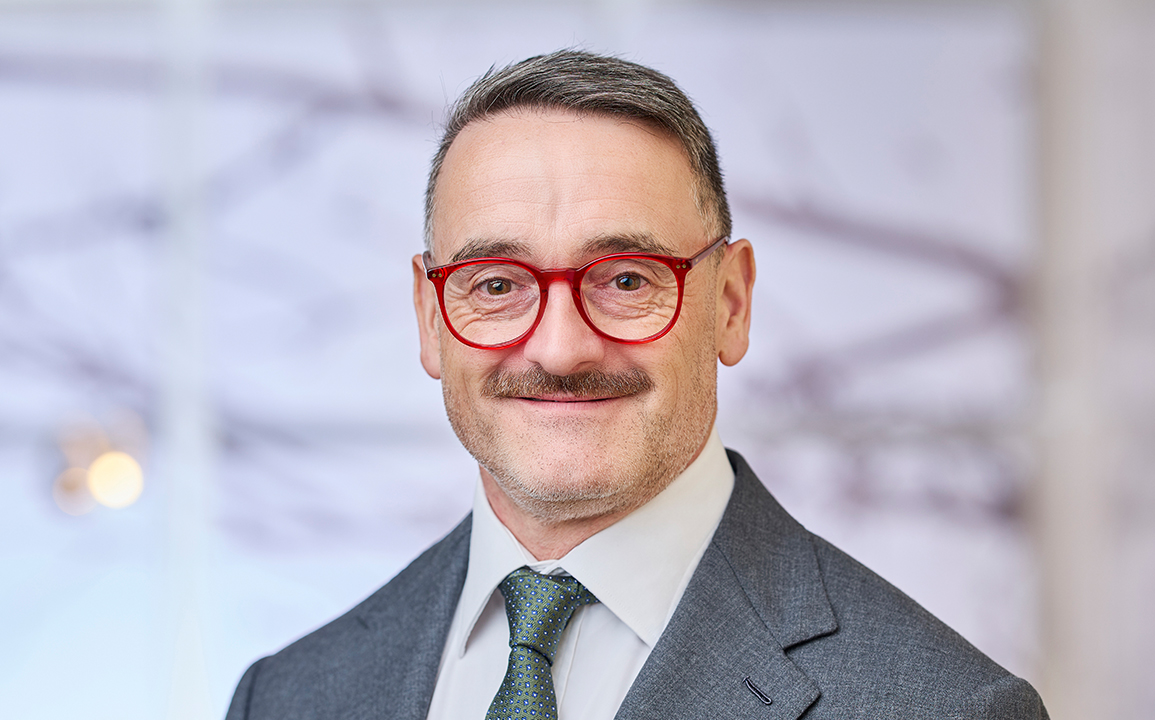
Ronan MacSweeney, President, The Law Society of NSW


